Put ramekins on a baking sheet. Bake for 25-35 minutes, until puffed and golden. Remove from oven, and let stand for 5 minutes. With a flexible spatula, remove strata to
Listen as the pages of the magazine come to life in the Storytellers podcast showcasing the voices of Our State writers. Each podcast episode features a writer reading their column
Listen as the pages of the magazine come to life in the Storytellers podcast showcasing the voices of Our State writers. Each podcast episode features a writer reading their column
Possums are not fast or graceful, but they are tough, adaptable, and oddly helpful — eating insects and cleaning up carrion — even as roads remain their biggest threat.
Listen as the pages of the magazine come to life in the Storytellers podcast showcasing the voices of Our State writers. Each podcast episode features a writer reading their column aloud, allowing each distinct voice to shine. Click below to listen to Eleanor read her column aloud.
When I was about 16 years old, our neighbor told me a joke. It was the day we found a possum lying dead in the street in front of our house. He’d been hit by a car, we assumed, the sad fate of many of the United States’ only native marsupials. His little pink paws, like human hands, were splayed upward, reaching for a lifeline that did not come.
“Why did the chicken cross the road?” my neighbor asked.
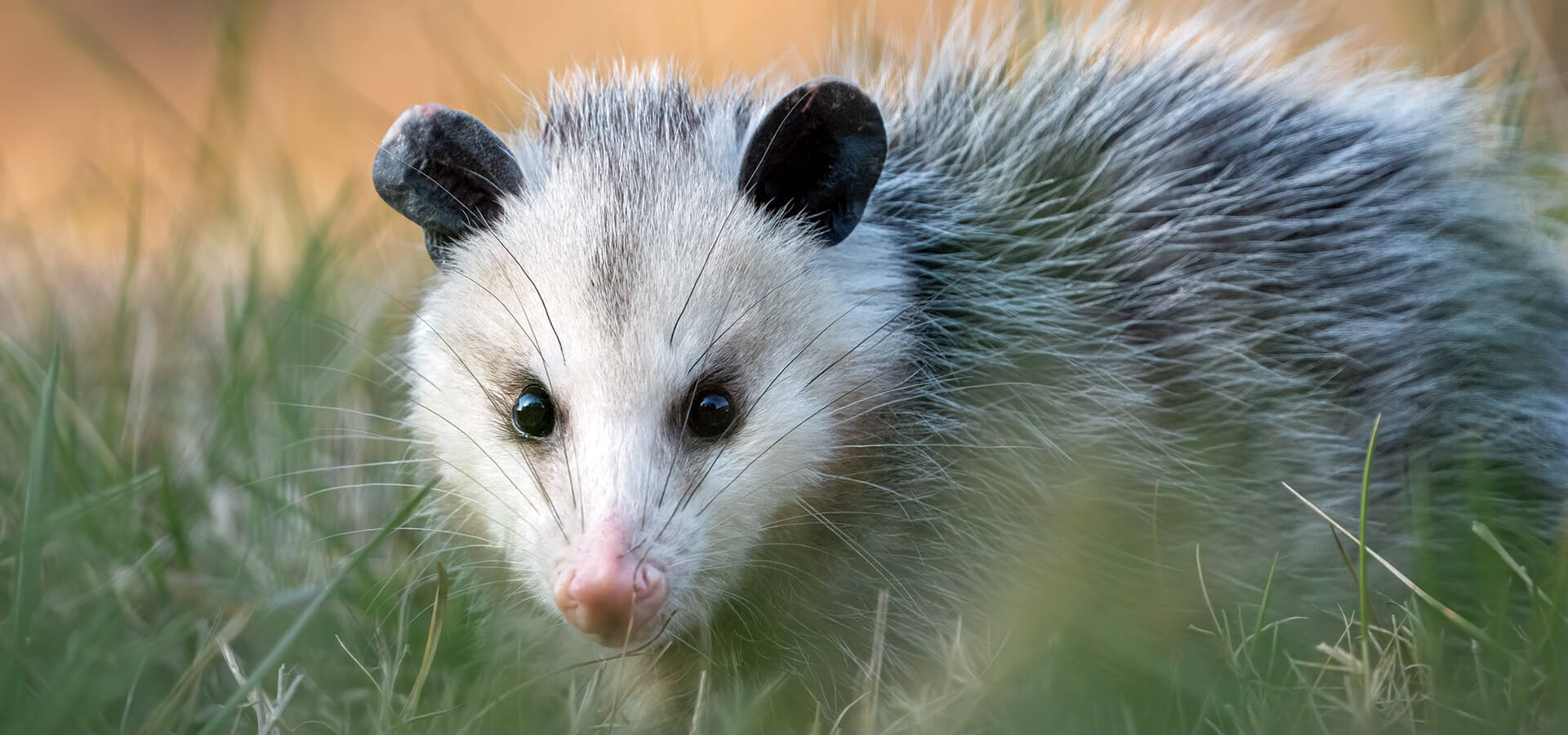
We looked at the ball of soft fur, all gray, black, and white; the pointy teeth; the pink nose thrust outward, good for sniffing; the straight, naked tail.
“Why?” I sighed.
“To show the possum it can be done.”
For most North Carolinians, roadkill is the most common way to see possums — more precisely, Virginia opossums. The living ones can be surprisingly sneaky for animals with such poor eyesight. They prefer to lurk in the shadows, living like fugitives, changing homes every few days, moving from an abandoned raccoon den to the space under porch steps to the smelly shelter of a garbage can.
When we do see live ones, they sometimes don’t make the most favorable impressions. They hiss, give us creepy grins, roll over and play dead, or release foul odors. But don’t let possums’ weird behaviors and abundant teeth fool you. Hit-and-runs and malodorous defenses aside, possums are the heroes of our backyards — and, in some ways, almost invincible.
It’s true that a hungry coyote, bobcat, owl, large snake, dog, raccoon, or human can make an easy meal out of a possum. They’re not particularly fast, so escape is not their strong suit. Because of these personal hindrances, most possums don’t live more than two years in the wild. Even in captivity, they rarely make it much past the four-year mark. So they improvise.
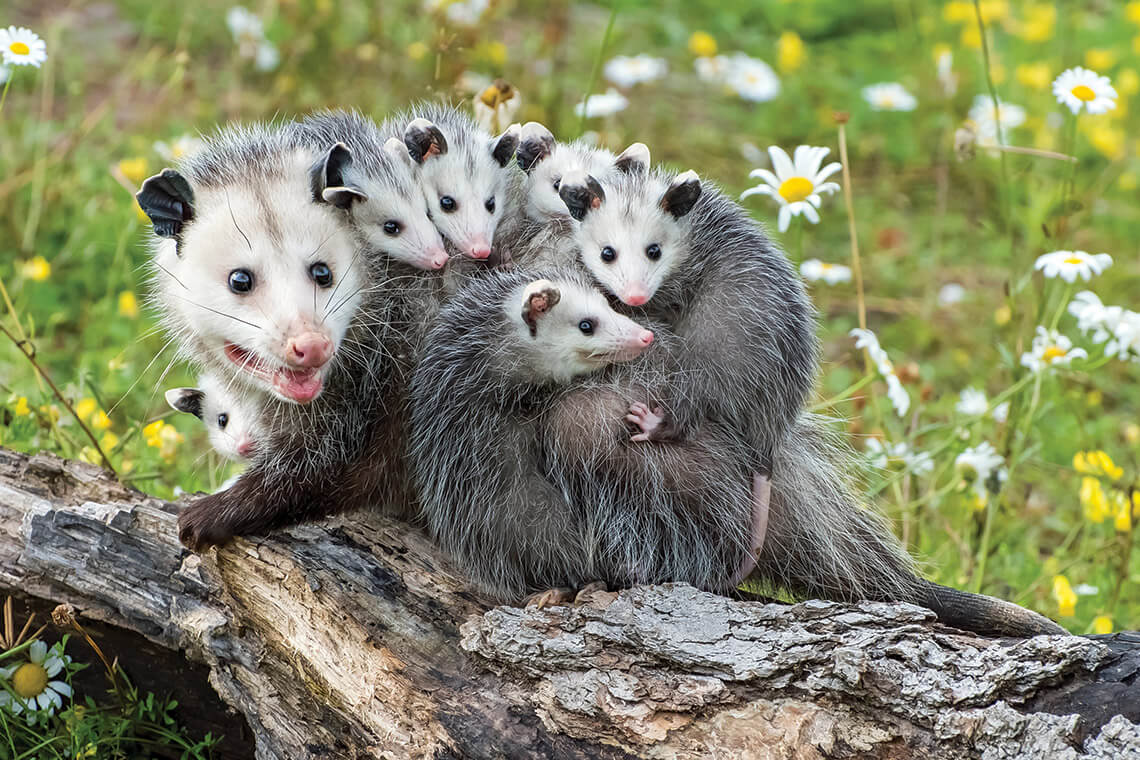
Born about the size of a honeybee, young possums graduate from Mom’s pouch to a slightly roomier seat on her back. photograph by Evelyn D. Harrison/Shutterstock
Possums can begin having babies at about 6 months old. Because so many animals make meals of them, they must have a lot of babies. A mother can give birth to as many as 13 possums after a gestation period of less than two weeks. She may do this more than once a year, carrying the young on her back when they outgrow her pouch. They cling to their mama bus as she snuffles around in the darkness, looking for insects, fruit, carrion, and the occasional bit of trash to eat.
And you’re welcome for their diet. Those spiky little teeth are well suited to crunching insects, and possums also help recycle nutrients by eating carrion and other leftovers. Their bad vision and affection for roadside scraps are what leads them so often to become roadkill themselves.They are attracted to the trash we throw out the window and the animals we run over. But they can’t always see the danger barreling down the street or move away fast enough.
Now, about superheroes. Possums have a lower body temperature than many mammals, which may help explain why rabies is rare in them. So, though they carry the countenance of the insane, that’s just their resting possum face. They also have compounds in their blood that help them resist venom from some pit vipers, including rattlesnakes and copperheads. Nearly invincible, then — except for roads, predators, and our own carelessness.
Possums live across North Carolina, in city neighborhoods and along country roads alike. Cleaning up for others, enjoying the night air, a smile at the ready, with a dash of invincibility — we could all benefit from playing possum every now and then. Just try not to hiss.
Get our most popular weekly newsletter: This is NC
North Carolina’s story lives in objects made here, used here, treasured here, and sometimes transformed here. They carry the marks of work and worship, progress and protest, music and memory. Some built industries; others built traditions. A few changed the nation. Together, they tell us who we are, who we’ve been, and what we carry forward.
The state’s biggest, highest, oldest, fastest, and farthest places have more than superlatives to their names. They also offer some of our most striking sights.
Possums are not fast or graceful, but they are tough, adaptable, and oddly helpful — eating insects and cleaning up carrion — even as roads remain their biggest threat.
To provide the best experiences, we use technologies like cookies to store and/or access device information. Consenting to these technologies will allow us to process data such as browsing behavior or unique IDs on this site. Not consenting or withdrawing consent, may adversely affect certain features and functions.
Functional
Always active
The technical storage or access is strictly necessary for the legitimate purpose of enabling the use of a specific service explicitly requested by the subscriber or user, or for the sole purpose of carrying out the transmission of a communication over an electronic communications network.
Preferences
The technical storage or access is necessary for the legitimate purpose of storing preferences that are not requested by the subscriber or user.
Statistics
The technical storage or access that is used exclusively for statistical purposes.The technical storage or access that is used exclusively for anonymous statistical purposes. Without a subpoena, voluntary compliance on the part of your Internet Service Provider, or additional records from a third party, information stored or retrieved for this purpose alone cannot usually be used to identify you.
Marketing
The technical storage or access is required to create user profiles to send advertising, or to track the user on a website or across several websites for similar marketing purposes.




 Listen as the pages of the magazine come to life in the