photograph by Matt Hulsman
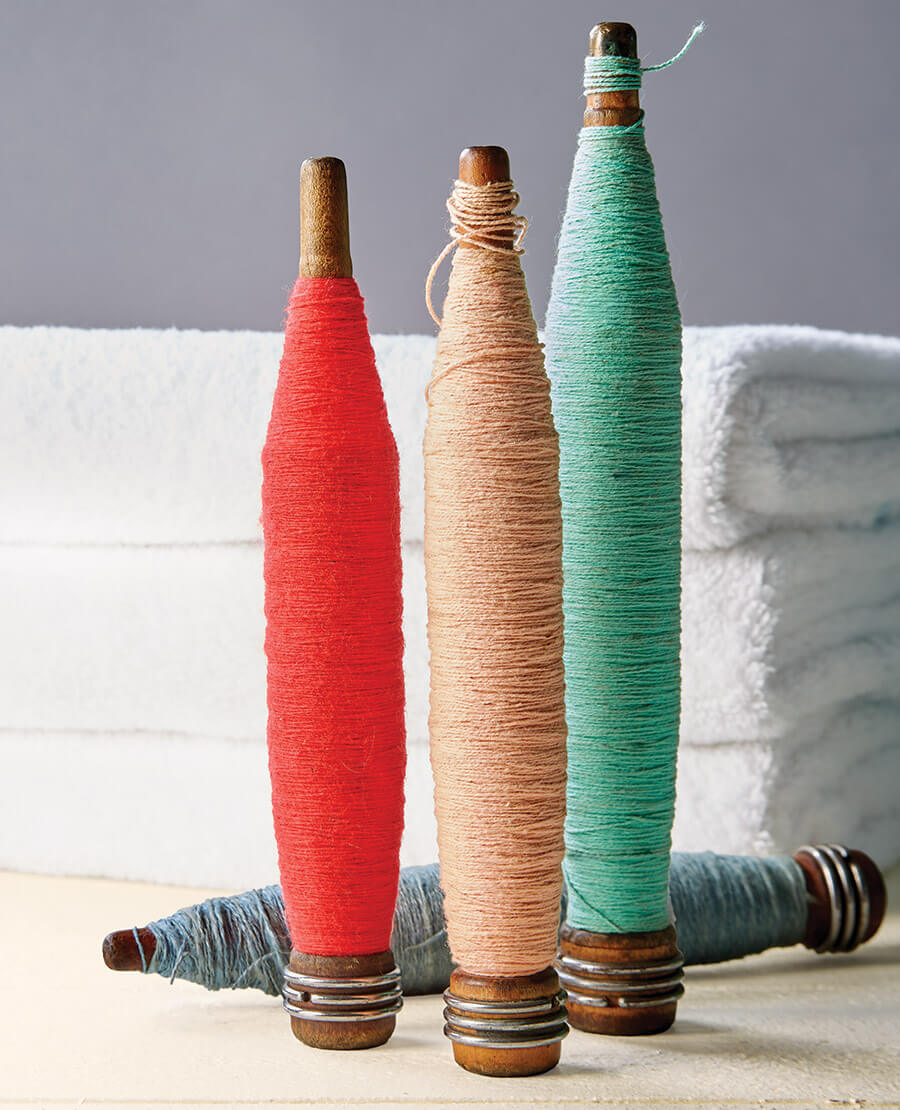
Textile Bobbin
Spinning heritage
Textile milling once powered towns all over North Carolina. Nearly every corner of the state had ties to the industry, and many towns had more than one mill. Belmont, in Gaston County, had upwards of 20.
Some mills even specialized in specific products. Cramerton became known for khaki, while mills in Randolph County produced coarse cottons like cheesecloth and tobacco cloth, which farmers used to shade young plants, says Mac Whatley, a retired lawyer and textile historian in Asheboro.
Looms are a little big to put on a shelf, but there are other pieces of equipment and mill-related artifacts worth looking for, explains Whatley, who is working to get the North Carolina Textile Museum in Franklinville up and running.
“Industrial history don’t get no respect,” he jokes. “When a mill closed, it was all thrown in the dumpster. I’ve done my share of dumpster diving to maintain the history of the industry.”
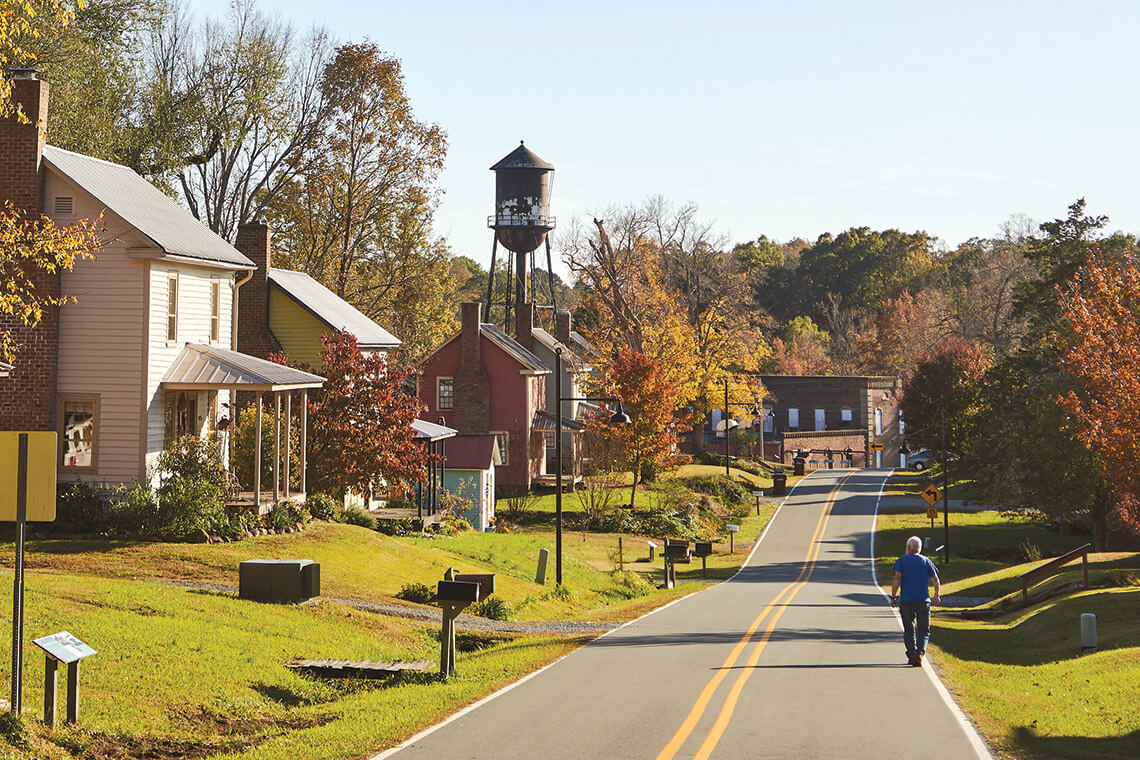
Founded in the 19th century, the preserved Glencoe Mill Village is home to more than 40 restored homes, mill buildings, a church, and more. photograph by Joey Seawell
Among the most recognizable pieces are wooden shuttles, sometimes called boat shuttles for their canoe-like shape. Each end is pointed and tipped with brass or another metal, with a hollow space in the middle for a spindle or bobbin holding thread. In New England, they were made from applewood, but when milling moved South after the Civil War, persimmon and dogwood became common. All three are dense woods that don’t splinter. Today, people repurpose them as candlesticks, sconces, key holders, and even small towel holders. But check the material first, Whatley cautions: Newer versions were made with phenolic plastics, which can be toxic when cut or sanded.
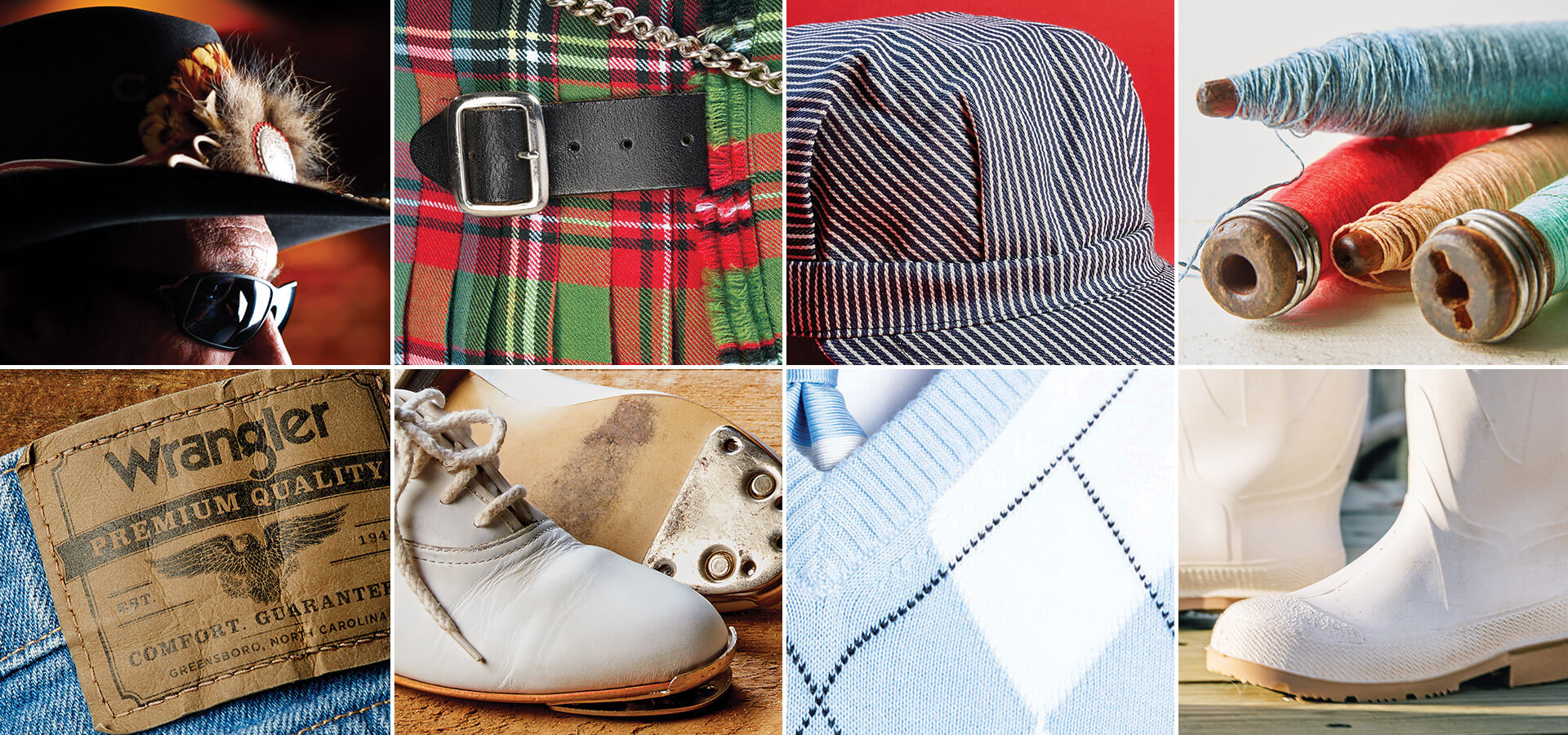
Bobbins held the thread inside the shuttle. Ranging from 7 to more than 12 inches long, wooden ones often look like scepters, with metal tips, carved ridges to hold the thread, and fatter tops banded with metal rings to hold them in place.
For Whatley, the value of these pieces isn’t just in their rarity. A shuttle, bobbin, or worn apron carries the story of the hands that used it and of the towns where mill whistles once marked the rhythm of the day. Saved from a dumpster, a shelf, or the back of a forgotten closet, those small remnants help keep North Carolina’s textile history from unraveling. — Kathleen Purvis
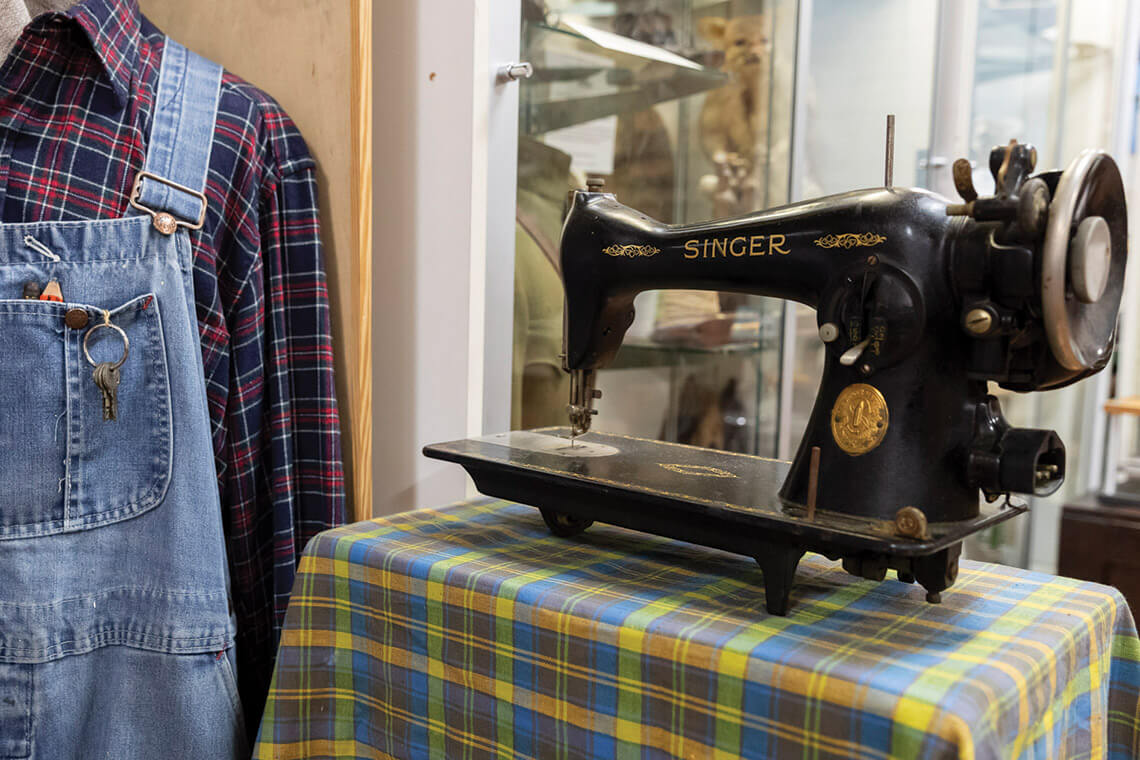
Opened in 1882, Glencoe Mills in Alamance County helped “sew” the textile boom in central North Carolina. Today, visitors to the Textile Heritage Museum can see samples of the plaid fabrics that the mill made and shipped around the world. photograph by Charles Harris
Thread Through Time
Housed in the former company store and management offices for Glencoe Cotton Mill in Burlington’s Glencoe Mill Village, the Textile Heritage Museum preserves machinery, artifacts, records, and everyday objects that tell the story of textile work and village life along the Haw River.
2406 Glencoe Street
textileheritagemuseum.org
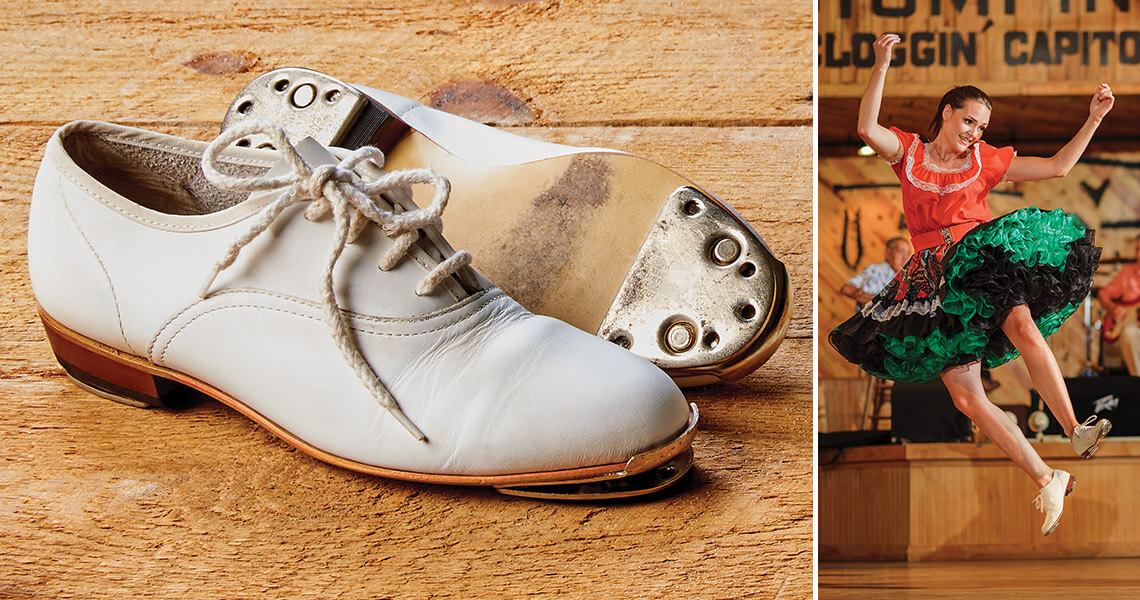
Metal-tipped shoes turn every step — and high-flying kick of the heels — into sound, including at the North Carolina Mountain State Fair’s Clogging Competition. photograph by Matt Hulsman; Jerry Wolford & Scott Muthersbaugh
Clogging Shoes
Percussion by the pair
It’s a distinctive sound: The double metal shoe taps clap together like the audience’s hands slapping knees, adding a percussive beat to the fiddles and banjos that often accompany cloggers.
Arising in the mid-1700s in Southern Appalachia, our official folk dance blended traditions of Irish, Scottish, English, and Dutch-German settlers into a new, foot-tapping style often performed to bluegrass music. Cherokee, African, and Russian Romani cultures influenced the style as the art form migrated, bringing that characteristic jingle to audiences across the state. — Rebecca Woltz
Step Right Up
Stomps, steps, and “jump chugs” fill the stage at the North Carolina Mountain State Fair, where folks show off their skills at the Clogging Competition. This is the real deal, as the contest adheres to the rules of the United Clogging Association.
September 11-12
1301 Fanning Bridge Road, Fletcher
wncagcenter.org
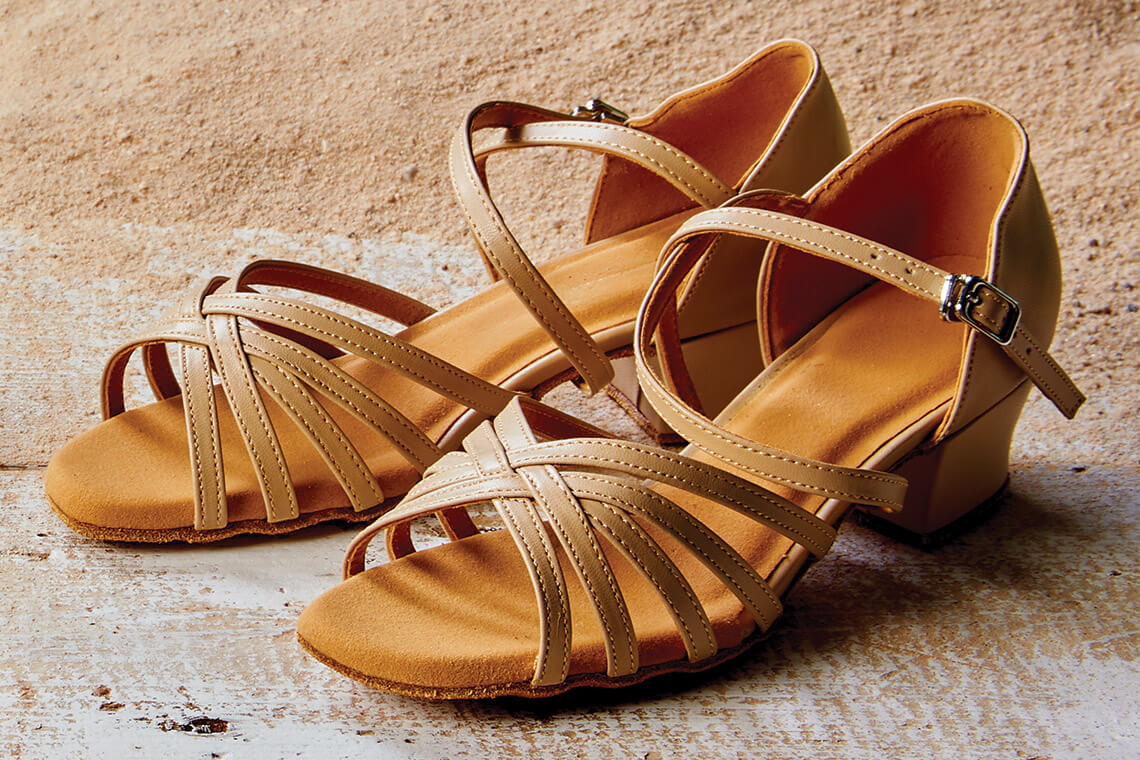
The Carolina shag’s smooth six-count steps were shaped by the rhythm and blues and swing music that filled coastal juke joints and oceanfront dance halls. photograph by Matt Hulsman
Shagging Shoes
Soles for the six-count
Along our coast, shaggers don low-heeled or flat shoes with smooth leather soles, perfect for gliding. Our official state popular dance — the mirrored-step swing style favored Down East — first developed to accompany beach music. This genre evolved in the 1940s, when vocals and instrumentals from Black and white artists were combined and played at Carolina Beach venues.
And although shoes are helpful for dancing indoors, the preferred method is dancing barefoot on sand. Either way, your feet will barely make a sound. — Rebecca Woltz
Boardwalk Boogie
Every June for the past 40 years, shaggers have made the sand their dance floor at the Carolina Beach Music Festival, our state’s largest beach music festival that’s actually held on the beach.
June 5, 2027
Carolina Beach Boardwalk
pleasureislandnc.org
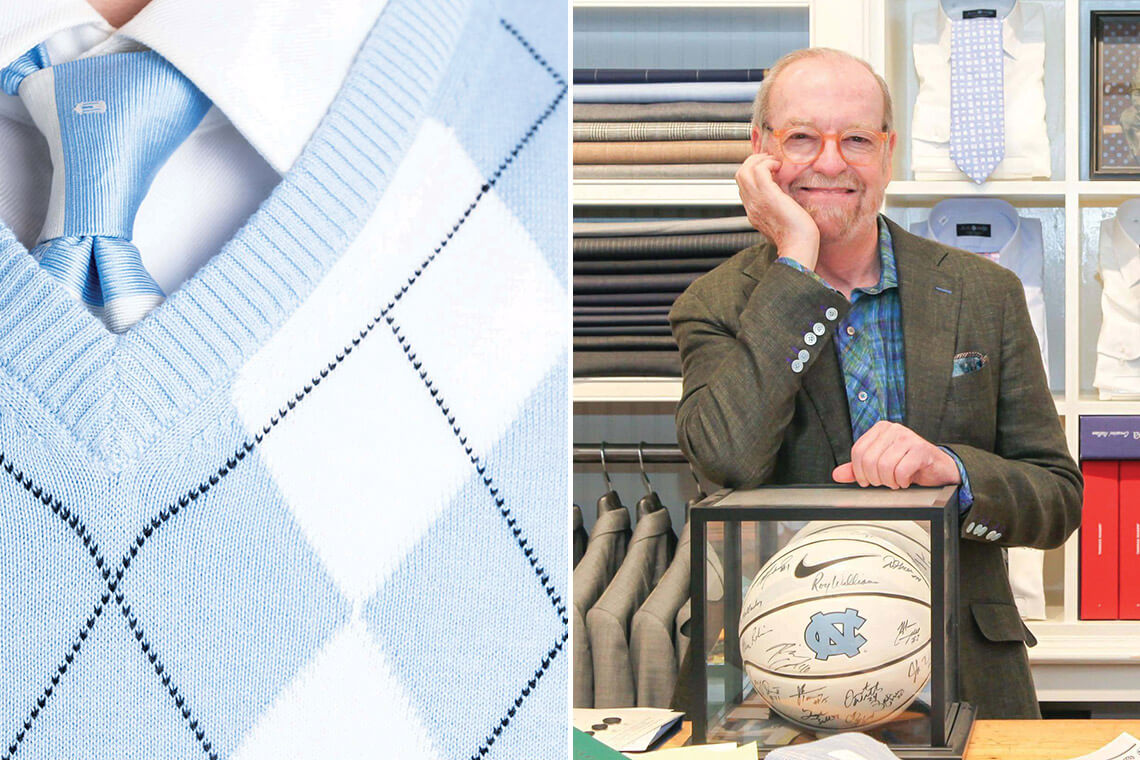
In 1990, Dean Smith enlists local designer Alexander Julian (pictured) to redesign the Tar Heels’ uniforms, introducing the now-iconic Carolina argyle. Photography courtesy of Julian’s Chapel Hill
UNC Argyle Sweater
Tar Heel worn
Donning a sweater with UNC Chapel Hill’s argyle pattern is about more than keeping warm. When Dean Smith recruited local fashion designer Alexander Julian to reimagine the basketball team’s uniforms in 1990, Julian mocked up nearly 30 variations, even slightly altering the hue of Carolina blue to appear more vibrant during televised games. Michael Jordan cast his vote for one — a Carolina blue, white, and navy argyle pattern. And when MJ speaks, everyone listens.
Today, that same diamond-and-cross motif appears on uniforms across all 28 varsity sports and at nearly every turn on campus. It’s a signature design that sings Carolina’s praises. — Cailyn Domecq
True Blue
Find plenty of argyle at Julian’s, the eponymous, third-generation family store where the design was born.
135 East Franklin Street
julianschapelhill.com
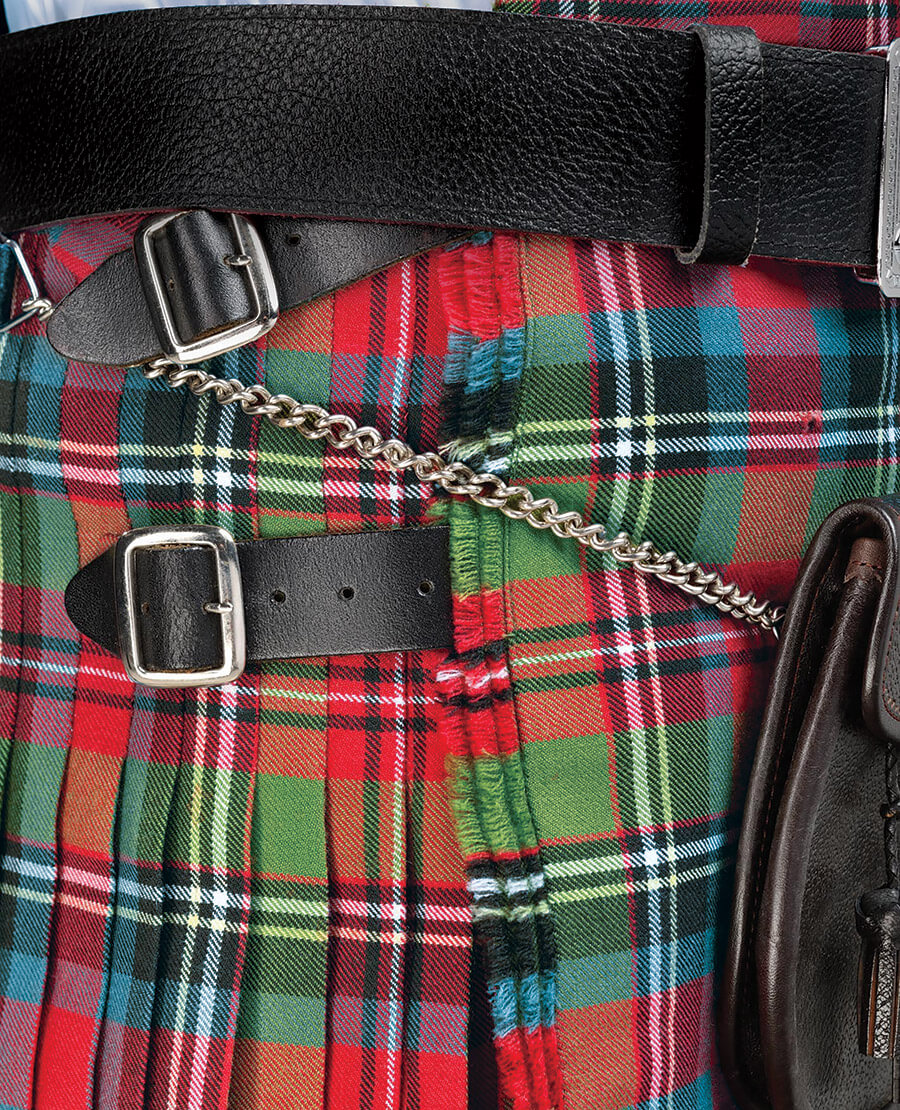
Photography courtesy of North Carolina Museum of History
Carolina Tartan Kilt
The fabric of our state
Bands of azure, green, red, yellow, white, and black crisscross to form the Carolina tartan, North Carolina’s official state tartan. The pattern is believed to have been used as ribbons on the coat of the Carolinas’ namesake, King Charles II, for his wedding in 1661. Three hundred and thirty years later, our nominal connection led to its adoption as the official tartan of the state. — Rebecca Woltz
Kilts on Parade
At Highland games across the state, you can spot a Carolina tartan kilt and enjoy the pageantry of our Scottish heritage through athletics, dance, food, and Celtic music.
Loch Norman Highland Games
April 17-18, 2027
Huntersville
lochnorman.com
Port City Highland Games
June 5, 2027
Wilmington
portcityhighlandgames.com
Grandfather Mountain Highland Games
July 8-11, 2027
Linville
gmhg.org
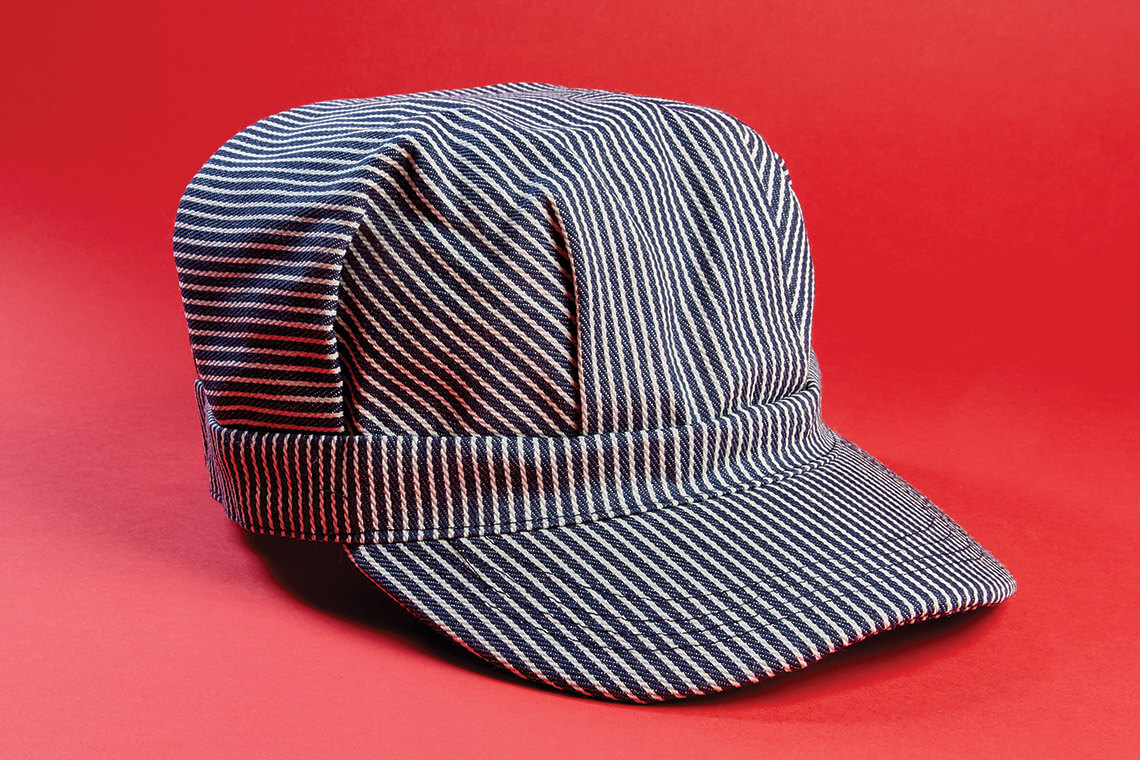
photograph by Matt Hulsman
Train Engineer’s Cap
Riding in style
The blue-and-white pinstriped engineer’s cap sold in the North Carolina Transportation Museum gift shop was never unique to North Carolina. But for generations, versions of it traveled the state’s rail lines atop the heads of engineers who steered trains that connected the Blue Ridge Mountains to Piedmont towns and the coast.
North Carolina’s railroad story began early. The Wilmington and Raleigh Railroad, once the longest in the world at 161.5 miles, began operating in 1840. The North Carolina Railroad, connecting Charlotte, Salisbury, and Raleigh, followed in 1856. The Southern Railway charted its course across the state in 1894 and, two years later, broke ground on the Southeast’s largest steam locomotive repair facility in Spencer — the building that now houses the North Carolina Transportation Museum.
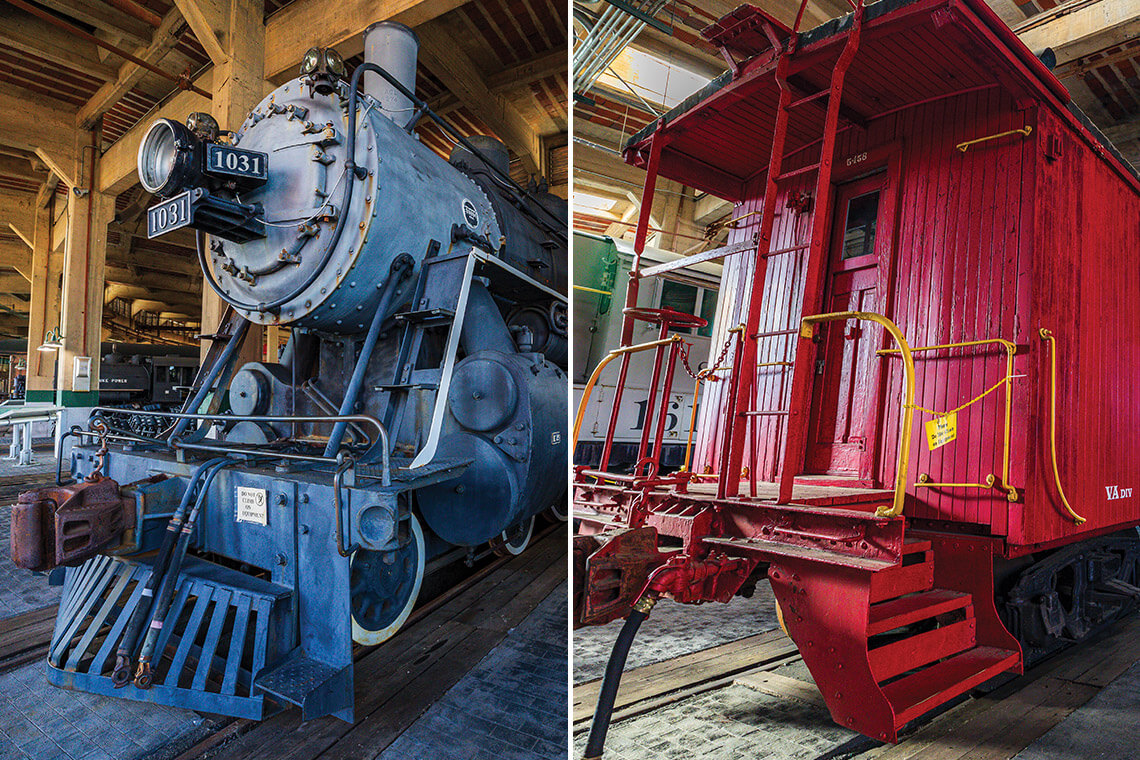
The former Southern Railway Spencer Shops now houses the NC Transportation Museum and its collection of rail vehicles. Photography courtesy of THE NORTH CAROLINA DEPARTMENT OF NATURAL AND CULTURAL RESOURCES
As rail lines expanded, they carried workers and supplies east to turpentine camps, and tourists and health seekers west to destinations like Asheville, which surged to become the state’s third-largest city in the wake of its newfound accessibility. All of those travelers and goods were shepherded by the engineers in the striped caps.
Today, there are 30 lines and 16 stations in the North Carolina rail system. When the Norfolk Southern AS line resumed service between Hickory and Asheville in April for the first time since Hurricane Helene, crowds gathered to cheer as the first train rolled through — a reminder of what locomotives still mean to North Carolinians. The striped cap may no longer be standard attire, but it remains a symbol of the railroaders who’ve helped keep North Carolina connected. — Jarrett Van Meter
photograph by Matt Hulsman
Belk Bag
Proof of purchase
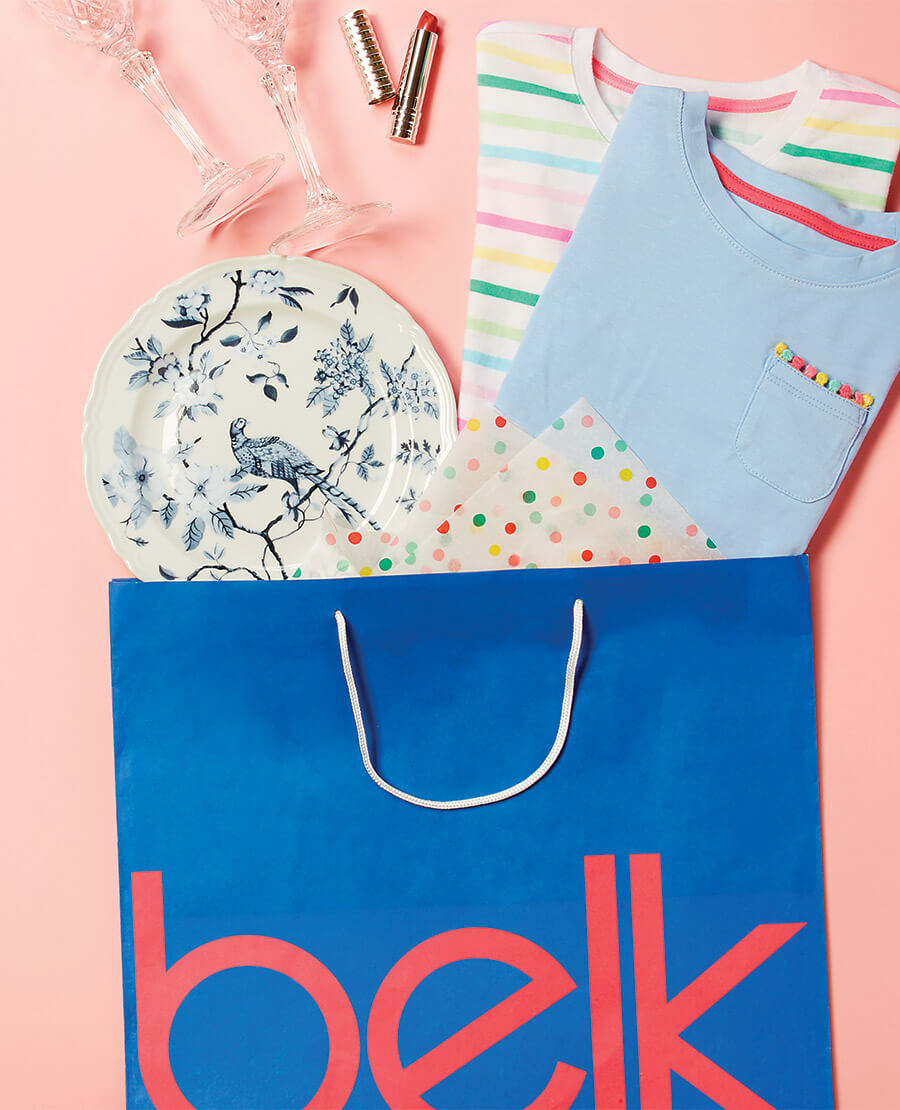
From the flourishing capital B to the sleek lowercase one, the Belk bag was a constant as I grew up alongside the North Carolina institution.
At 4, I shopped with my older sister at the synthetic-snow-covered “Secret Shop” for our parents’ Christmas present. Throughout elementary school, teacher workdays meant lunch with my father at the downtown cafeteria, Raleigh’s de facto corporate dining room.
By junior high, my friend Elizabeth and I could shop without our parents for 99-cent 45s and get free makeovers from patient Clinique saleswomen. At 18, I redeemed a newsprint coupon for the miniature Lane cedar chest, a gift to high school graduates. I registered for Wedgwood and Waterford at 26. Throughout my 30s, I bought camp clothes with my three children.
At 55, I needed a blue blazer for my college son who arrived without his for my father’s funeral. Elizabeth found one for us at Belk.
The Bs and blues on the bag may change, but memories stay steadfast. — Katherine Snow Smith
Photography courtesy of Charlotte Trail of History
From Bargains to Bronze
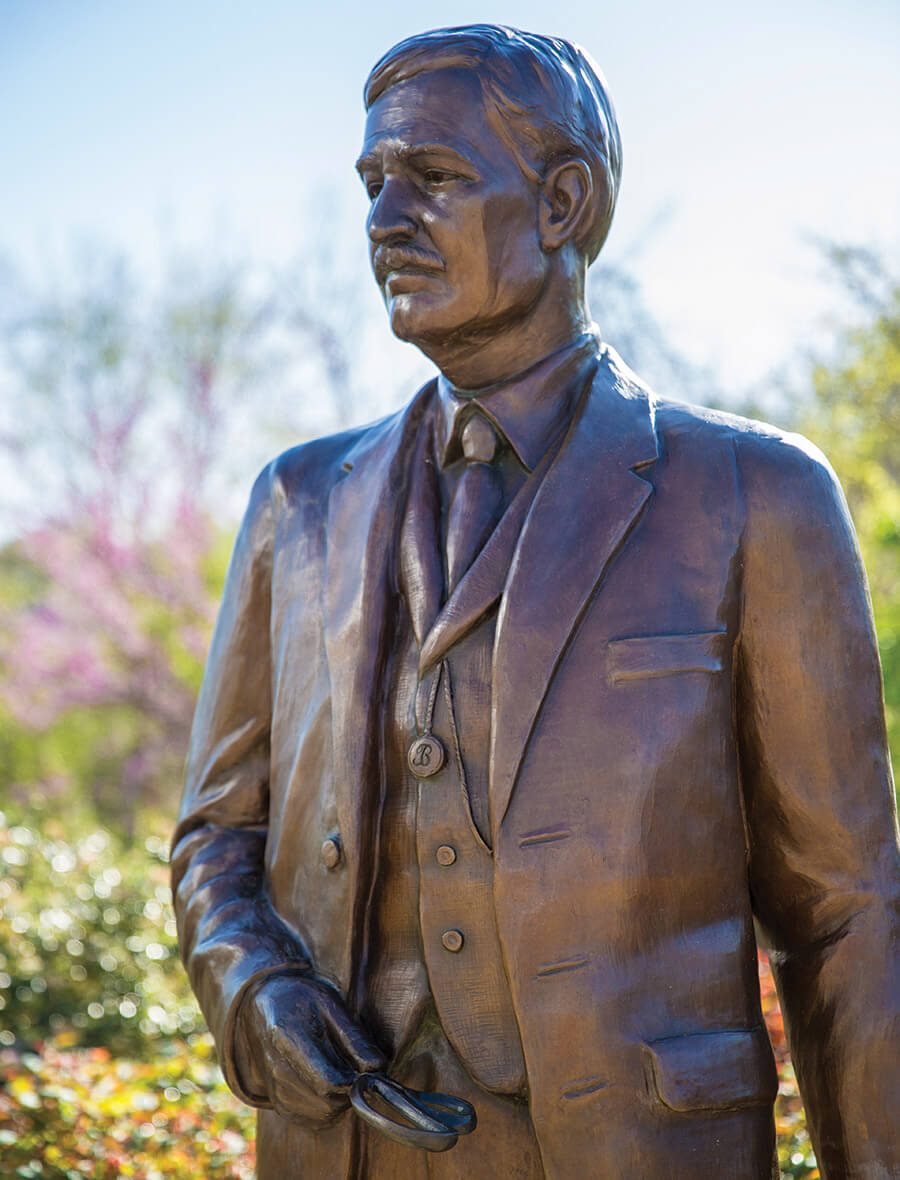
Walk the Charlotte Trail of History, and near the Metropolitan shopping complex off Charlottetowne Avenue, you’ll discover a statue of William Henry Belk. At 14, he began working at a dry goods store in Monroe. By 26, he had struck out on his own and started a small bargain store. Seven years later, in 1895, he opened Belk Brothers Company in Charlotte with the help of his brother, and together, they turned Belk into a retail powerhouse.
101 North Kings Drive
charlottetrailofhistory.org
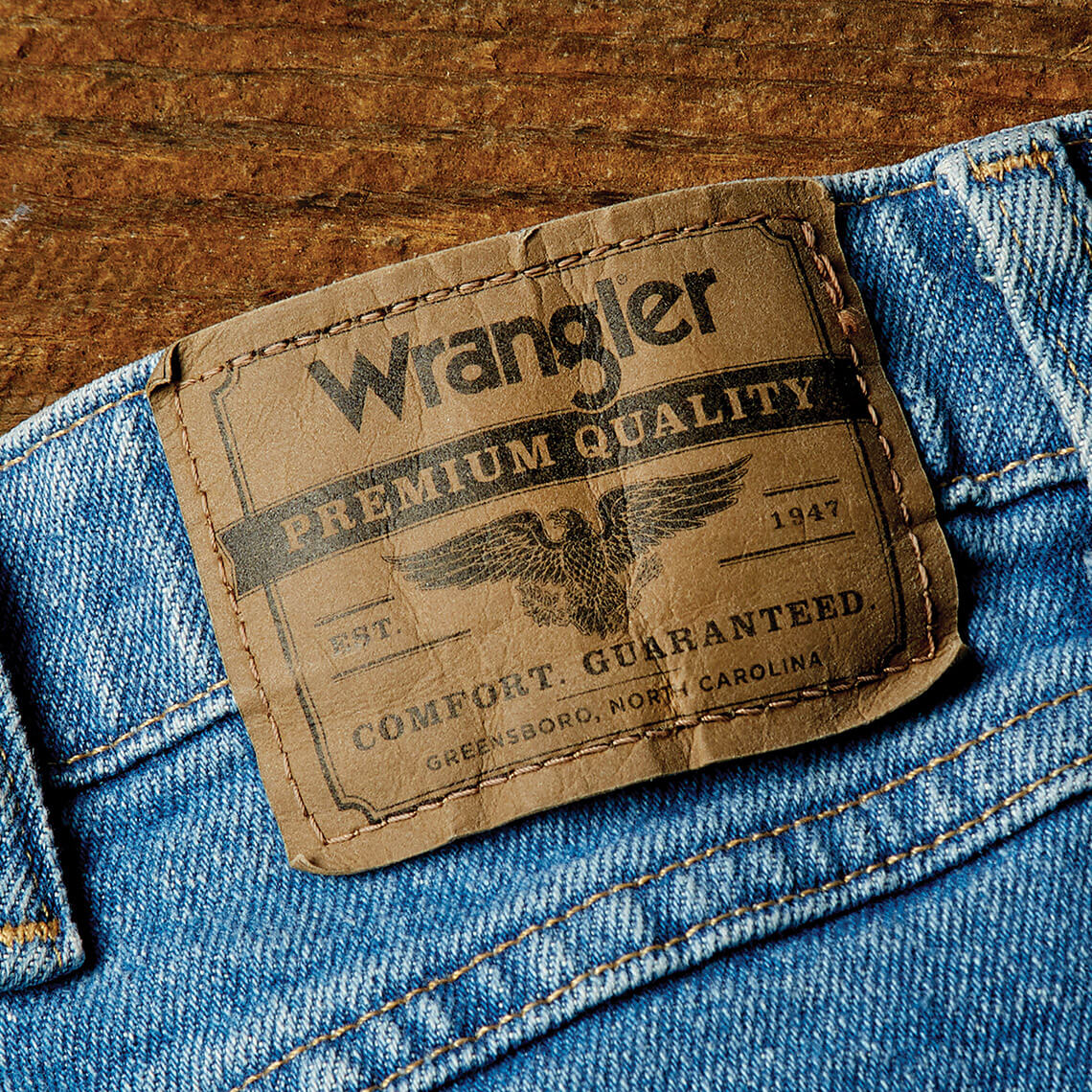
In 1947, celebrity tailor Rodeo Ben designs and introduces the first pair of Wrangler jeans. photograph by Matt Hulsman
Wrangler Jeans Label
Denim with Carolina roots
Since 1947, the leather — and later, plastic — Wrangler label has adorned the behinds of cowboys, farmers, and factory workers across the country and the globe. The brand was founded and is still headquartered in Greensboro, a city formerly known for its thriving denim industry, where the clicks and clacks of looms once echoed from mills across the city. — Rebecca Woltz
Jean Machine
Tough and sturdy, Wrangler jeans are a hallmark of the Lee Wrangler Hometown Studio.
603 South Elm Street
wrangler.com
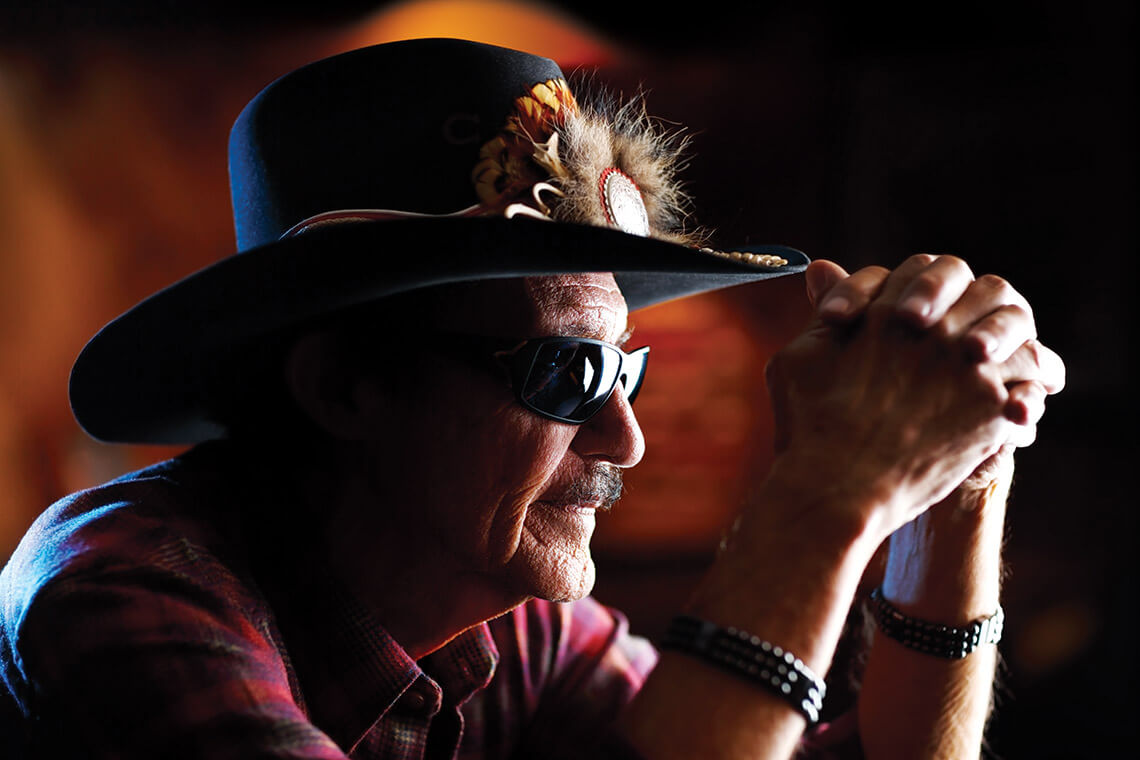
Richard Petty adopted his signature cowboy hat in the late 1970s, replacing a rotation of sponsor caps with a look that became as legendary as his No. 43. photograph by Jerry Wolford & Scott Muthersbaugh
Richard Petty’s Cowboy Hat
The King’s crown
When Richard Petty introduced a cowboy hat as part of his look in 1979, it was accepted as quickly and collectively as gravity, mortality, and all other earthbound truths.
Like Michael Jordan’s billion-dollar “jumpman” logo and Jerry West’s National Basketball Association logo, it was the serendipitous alignment of figure and folklore, man and moment. Petty’s leathery skin, lean body, and fluorescent smile looked even more at home under the wide brim than the red and blue racing helmet. The only question brought by the arrival of the new look was where it had been up to that point.
Charlie 1 Horse Hat Company was just a year old when a representative came to Level Cross looking for business. Richard and Lynda Petty’s son, Kyle, was selling western wear out of the family’s Blue Hobby Horse Antiques & Gifts shop on Old U.S. Route 220, roughly 12 miles south of Greensboro. The salesman asked Kyle to pass along a hat to his father to try out. Richard loved it, and a Charlie 1 Horse has been atop his head ever since.
Photography courtesy of Charlotte Regional Visitors Authority
The hats have been through many different iterations, styles, and colors, but the basics are the same: a cattleman’s crease, a slightly curved brim, and a banded bouquet of varying feathers, beads, and occasionally even bones, all held together by an ornament — sometimes metal, sometimes stone — that sits in the middle like a delta.
Petty retired from racing in 1992 with a record 200 career victories and began prowling the sidelines as a team owner, broadcaster, and proud father. The helmet was fully usurped by the hat. Rare is the photo in which “the King” is without his crown, and a favorite angle through the years has become Petty in silhouette, all details and specifics rendered neutral in one shot. A legend looming over his sport. His kingdom. — Jarrett Van Meter
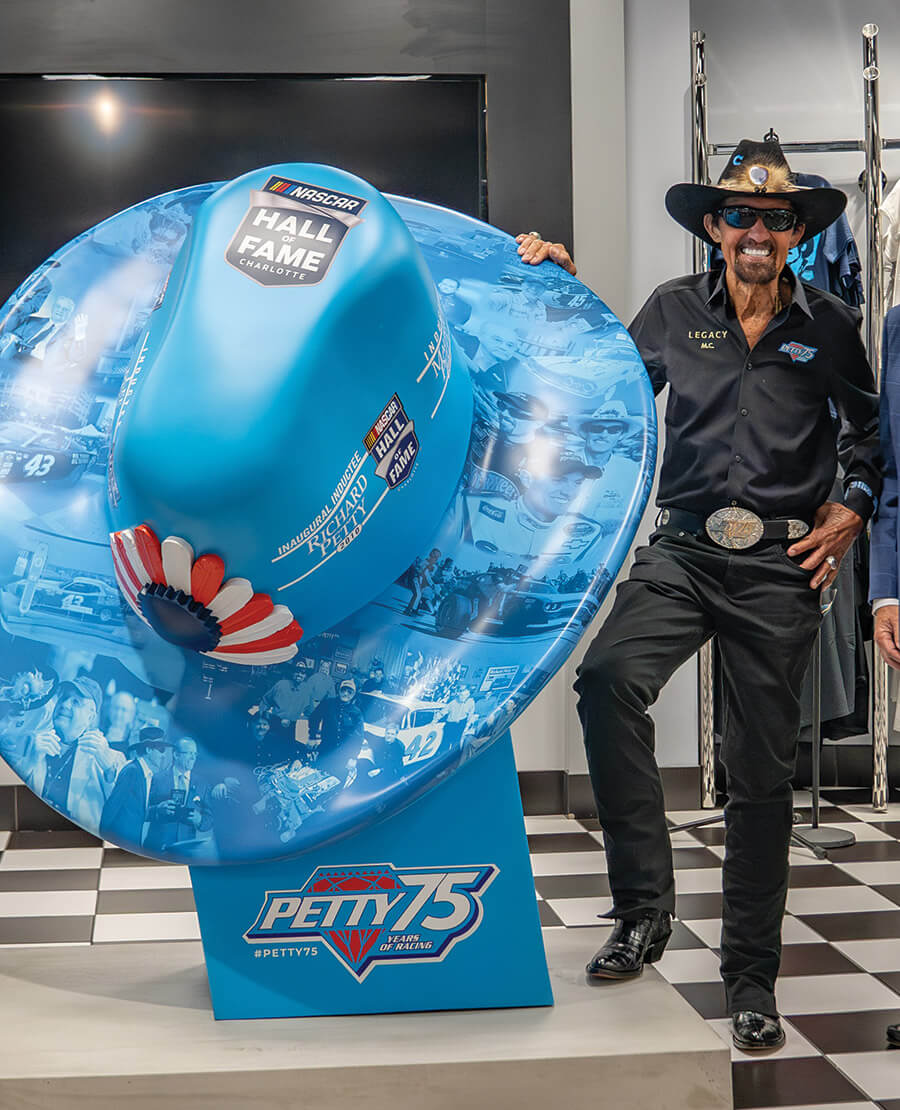
The Half-Ton Hat
The hat looms as large as the legend himself — literally. Pit stop into the NASCAR Hall of Fame’s Gear Shop in the Queen City to stand in the shadow of a 6-foot-tall, nearly 1,000-pound “Petty-blue” statue of the King’s hat.
400 East Martin Luther King Jr. Boulevard, Charlotte
nascarhall.com
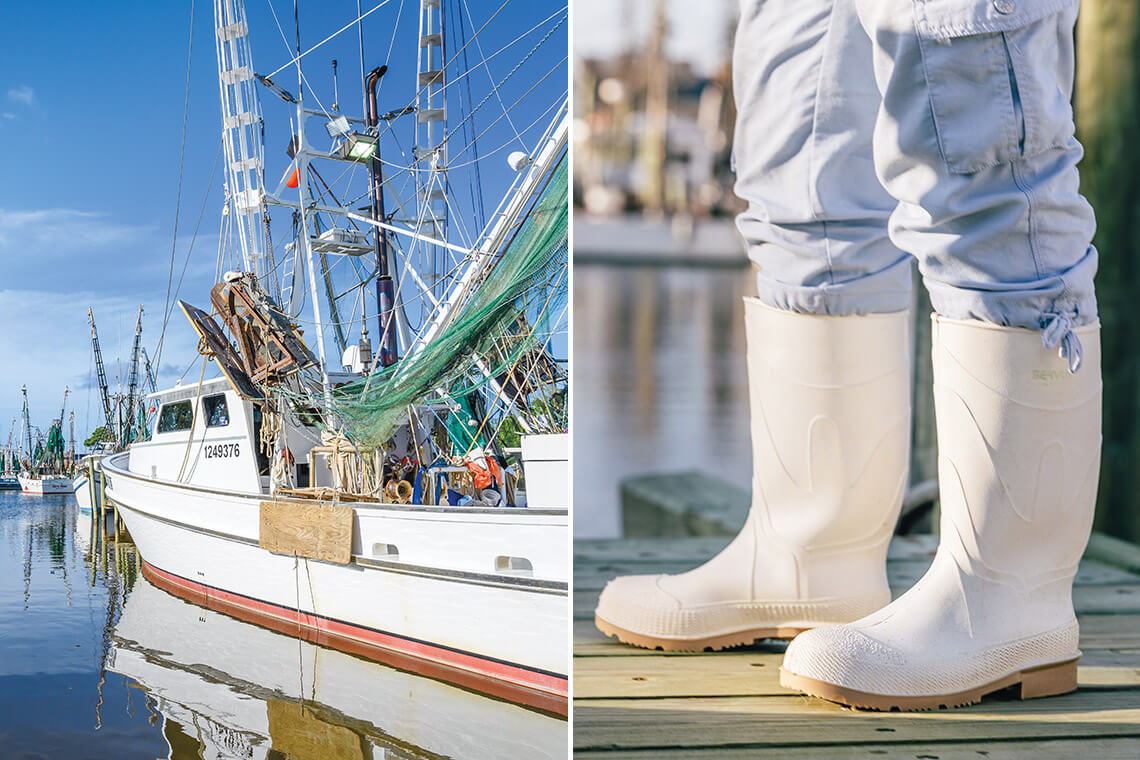
These boots were made for shrimping: The white rubber footwear favored by the Onslow County fishing community has earned the nickname “Sneads Ferry sneakers.” photograph by Chris Council, Baxter Miller
Sneads Ferry Sneakers
Where the rubber meets the dock
With a sole as grippy and textured as an octopus’s arm, the “Sneads Ferry sneaker” is the shoe of choice for shrimpers, commercial anglers, deckhands, dockhands, fishmongers, and waterside workers from Hatteras to Holden Beach. These white rubber boots, cut to the ankle or just below the knee, are tough, functional, and iconic. They trace their roots to Normandy, France, in the 1920s, but the version we know gained popularity in the ’50s, when they replaced heavy leather boots with a waterproof version whose white color helped reflect heat.
They’re right at home in Sneads Ferry, the self-proclaimed “Shrimp Capital of the East Coast,” where, thanks to a long history of watermen pulling in netfuls of belly-busting, wallet-filling shrimp, there are thousands of these boots, some new and waiting for their first saltwater baptism, others as broken-in as a boot can be. You’ll see them everywhere, from the dock to the grocery store to the line at the bank. Made from durable rubber or PVC, they’re nigh indestructible, and they’ll keep the wearer dry and sure-footed on a slick deck without leaving a mark. — Jason Frye
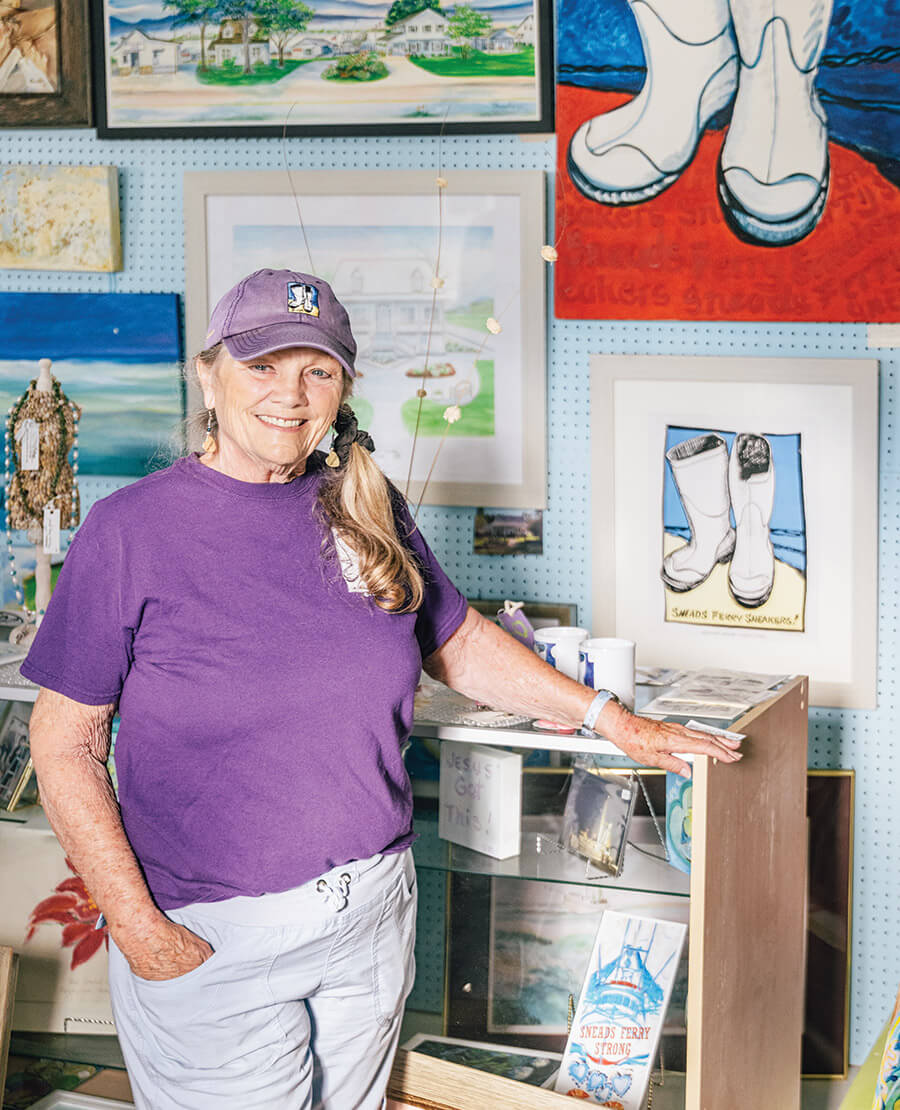
photograph by Baxter Miller
Art & Sole
Artist Sherry Thurston memorialized the ubiquitous fishing footwear in a drawing — two white boots akimbo on a red and blue background — and a brand. Over time, she’s created a gallery full of original art, prints, stickers, decals, coffee mugs, and even a baby onesie featuring these coastal icons.
Thurston Art Gallery
328 Peru Road, Sneads Ferry